Welcome to
Destiny Counseling & Career Center LLC (DCACC)
Resource Page
This is where your understanding begins. Get to know our business and what we do, and how we're committed to quality and great service. Join us as we grow and succeed together. We're glad you're here to be a part of our story.
Resources
What is Therapeutic Counseling?
Therapeutic counseling, or psychotherapy, is a collaborative process where a trained professional helps individuals, couples, or families explore emotions, behaviors, and thoughts in a safe, confidential space to improve mental well-being, manage life challenges, and develop healthier coping strategies for issues like anxiety, depression, trauma, or relationship problems. It's a structured form of "talk therapy" using various techniques, from short-term problem-solving to deeper insight-building, to foster personal growth and resolve difficulties.
Key Aspects
- Collaborative Partnership: You work with your therapist to set goals and track progress, making it an active process.
- Safe Environment: It provides a non-judgmental space to discuss difficult feelings and experiences openly.
- Skilled Professional: Conducted by licensed mental health professionals (psychologists, social workers, counselors) who use evidence-based methods.
- Focus on Well-being: Aims to alleviate distress, understand oneself better, and build lasting skills for managing life's changes.
Common Goals & Benefits
- Manage Symptoms: Reduce anxiety, depression, PTSD, or ADHD.
- Cope with Life Events: Navigate grief, divorce, job loss, or chronic illness.
- Improve Relationships: Resolve conflicts or build healthier social skills.
- Develop Insight: Understand patterns in thinking, feeling, and behavior.
Types of Therapy
- Individual: One-on-one sessions.
- Group Therapy: Sessions with others facing similar challenges.
- Family/Couples Therapy: Works with relationship dynamics.
- Cognitive Behavioral Therapy (CBT): Focuses on changing unhelpful thought and behavior patterns.
How it Works
Therapists use various approaches (like CBT, psychodynamic) to help clients explore issues, practice new skills (sometimes through homework), and find new ways to handle stress and problems, leading to lasting positive changes.
Career/Life Coaching
Discover your strengths and achieve your career goals through coaching.

Couples Counseling

Grief Group Counseling

Family Counseling

Career/Life Coaching
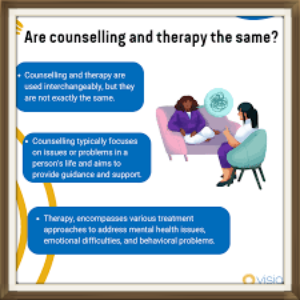
Counseling vs. Therapy
This is where your journey begins. Get to know our the difference between Counseling and Therapy

National Board of Certified Counselors
The National Board for Certified Counselors (NBCC) does not provide a direct comparison between counseling and therapy, as the terms are often used interchangeably. However, it is important to note that counseling typically focuses on short-term solutions and specific issues, while therapy often dives deeper into patterns, emotions, and past experiences to create lasting change. Both counseling and therapy are mental health treatments that involve talking with a trained professional to understand thoughts, feelings, and behaviors better and work collaboratively to promote mental wellness.
________________________________________________________________________________________________
American Counseling Association
ACA definition of counseling vs therapy. The American Counseling Association (ACA) defines counseling as a professional relationship that empowers diverse individuals, families, and groups to accomplish mental health, wellness, education, and career goals. Counseling is often focused on one specific issue and considered a short-term treatment, while psychotherapy tends to treat a broader range of issues and more complex problems, and can be a long-term treatment.
Life and Career Coaching
A Life and Career Coach is a professional who partners with individuals to clarify goals, overcome obstacles, and create actionable strategies for personal and professional growth. They offer objective guidance, accountability, and support to improve work-life balance, enhance career trajectory, and boost mental well-being.
What a Life and Career Coach Does
- Goal Setting & Achievement: Coaches help translate broad desires (e.g., "I want a better job") into specific, manageable, and actionable steps.
- Professional Development: Career coaches assist with career changes, resume building, interview preparation, and job searching.
- Overcoming Obstacles: They identify limiting beliefs and personal blocks, providing strategies to overcome them.
- Objective Perspective: Coaches act as a sounding board, providing an unbiased, outside view on your life choices.
- Accountability: They ensure you stay on track with your goals, encouraging consistent progress.
How They Make Your Life Better
- Improved Clarity: You gain a deeper understanding of your own strengths, values, and career goals.
- Increased Confidence: Through positive reinforcement and overcoming challenges, you develop a more proactive and confident mindset.
- Better Work-Life Balance: Coaches help you manage stress, prioritize self-care, and find harmony between professional responsibilities and personal life.
- Faster Results: By focusing on actionable, tailored plans, you can achieve career and personal milestones faster than working alone.
- Improved Relationships & Well-being: By addressing communication skills and personal habits, they help you build stronger relationships and improve overall quality of life.
Life coaching is future-oriented, focusing on where you are now and where you want to be, distinct from therapy which often addresses past trauma.


